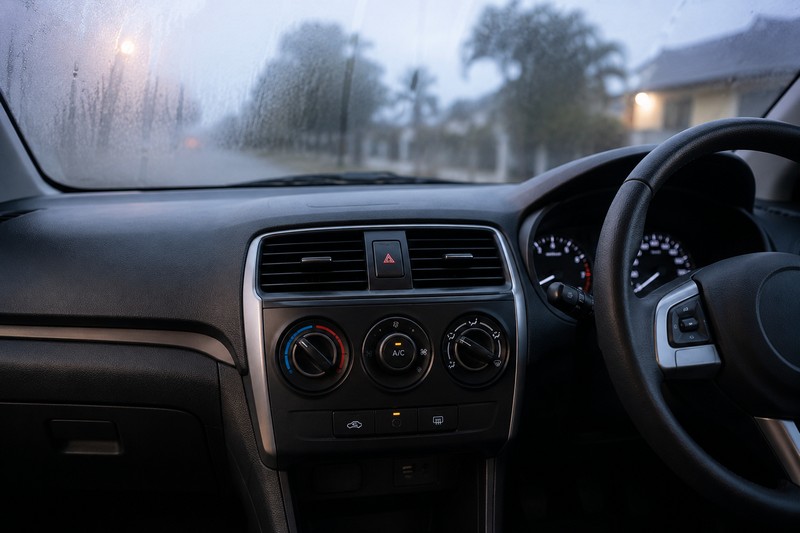
How Your Car Heater Works
Unlike a home heater that generates its own heat, a car heater is entirely dependent on the heat produced by the engine. Hot coolant from the engine is circulated through a small radiator-like component called the heater core, which sits inside the dashboard. The blower fan pushes cabin air across the heater core — the air picks up heat from the hot coolant and blows into the cabin as warm air.
This means a car heater can only work properly when three things are true: the engine is at operating temperature, the cooling system has sufficient coolant at the correct level, and the heater core is clear and unblocked. A failure in any part of the cooling system, the heater controls, or the blower system can cause the heater to stop working.
Understanding this helps narrow down the cause quickly. If the engine is warming up normally but the heater blows cold, the problem is in the heater circuit specifically. If the engine is struggling to reach temperature, that is a thermostat problem that affects both the heater and the cooling system.
7 Most Common Causes
1. Low Coolant Level
The most common cause of a car heater not working in Kenya — and the cheapest to fix — is a low coolant level. The heater core is positioned at a high point in the cooling system. When the coolant level drops, air pockets form in the system and the heater core is the first component to lose its coolant supply, resulting in cold or lukewarm air from the heater even when the engine is warm.
Check your coolant reservoir level immediately if your heater stops working. The reservoir is a translucent plastic tank near the radiator marked MIN and MAX. If the level is below MIN, topping up with a 50/50 mix of coolant and water may restore heater function immediately. A persistently low coolant level indicates a leak that must be found and repaired — topping up repeatedly without fixing the source is not a long-term solution. See our guide on car overheating for information on finding and fixing coolant leaks.
If your heater has gradually gotten weaker over weeks rather than stopping suddenly, a slow coolant leak dropping the level progressively is a very likely cause. Check the level first thing in the morning before starting the engine — this gives the most accurate reading before the system pressurises and any leaks are masked.
2. Faulty Thermostat Stuck Open
While a thermostat stuck closed causes overheating, a thermostat stuck in the open position causes the opposite problem — the engine never fully reaches operating temperature. Cool coolant circulates continuously through the radiator and back, never warming sufficiently to heat the cabin through the heater core. The temperature gauge on the dashboard stays permanently low — below the midpoint even after 10–15 minutes of driving.
A thermostat stuck open is very common on older vehicles in Kenya, particularly those that have been "fixed" by removing the thermostat entirely — a common but damaging shortcut used by some roadside mechanics to cure overheating. Without a thermostat the engine never fully warms up, fuel consumption increases, engine wear accelerates and the heater produces no warmth. Thermostat replacement costs Ksh 2,000–6,000 and is one of the most cost-effective repairs for a non-functioning heater. Find an engine specialist near you.
3. Blocked or Clogged Heater Core
The heater core is a small heat exchanger inside the dashboard that transfers heat from the coolant to the cabin air. Over time — particularly in vehicles where the coolant has never been flushed and has become contaminated with rust, scale and degraded antifreeze — the heater core's small internal passages become partially or fully blocked. The result is reduced or absent heat even though the engine reaches normal temperature and the coolant level is correct.
Signs of a partially blocked heater core include heat that is present but significantly weaker than it used to be, uneven warmth from different vents, and sometimes a slight sweet smell from the heater vents (coolant odour through a partially blocked core). A heater core flush — where a mechanic forces flushing fluid through the core to clear the blockage — costs Ksh 2,000–5,000 and restores flow in many cases. If the core is too blocked or corroded to flush effectively, replacement is required (Ksh 10,000–35,000).
4. Heater Core Leak
A leaking heater core is a more serious problem than a blockage. When the heater core develops a leak — through corrosion from old contaminated coolant or physical damage — coolant escapes inside the dashboard. Symptoms are distinctive and unmistakable once you know what to look for: a sweet smell from the heater vents (coolant has a characteristic sweet odour), fogging on the inside of the windscreen that is oily or greasy rather than normal condensation, wet or damp carpet on the passenger side floor, and a coolant level that drops regularly without any visible external leak.
A leaking heater core is a significant repair because accessing it requires dashboard disassembly — on most vehicles this is a full-day job. Heater core replacement in Nairobi costs Ksh 10,000–35,000 for the part plus Ksh 5,000–15,000 for labour, making it one of the more expensive heating system repairs. On older vehicles where the cost approaches or exceeds the car's value, some owners choose to bypass the heater core — capping the two coolant hoses — which disables heating permanently but stops the leak.
5. Failed Blower Motor or Resistor
If your heater produces warm air but only at certain fan speeds — or produces no airflow at all — the blower motor or its resistor has likely failed. The blower motor is the fan that pushes air through the heater core and into the cabin. The blower resistor controls fan speed by varying the electrical resistance to the motor. When the resistor fails, some or all fan speeds stop working — commonly the lower speed settings fail first, leaving only the highest setting working before the motor fails entirely.
A complete lack of airflow from any vent at any fan setting suggests a blown blower motor fuse (check this first — it costs nothing) or a dead blower motor. Only certain fan speeds not working strongly suggests the resistor. Blower motor replacement costs Ksh 4,000–12,000. Blower resistor replacement costs Ksh 1,500–4,000. An auto electrical specialist can diagnose this quickly.
6. Air Lock in the Cooling System
An air pocket trapped in the cooling system prevents coolant from flowing through the heater core even when the coolant level in the reservoir appears correct. Air locks typically occur after a cooling system repair — a thermostat change, hose replacement, or head gasket repair — where the system was drained and not fully bled of air when refilled. They can also develop slowly from a small leak that allows air to enter the system.
An air lock in the cooling system causes a heater that blows cold despite the coolant level being correct and the engine reaching normal temperature. A gurgling sound from the dashboard area — the sound of coolant trying to flow past an air pocket in the heater core — is a very specific symptom of an air lock. Bleeding the cooling system to remove the air pocket costs Ksh 1,000–3,000 at a garage and often resolves the heater problem immediately. This should always be done after any cooling system repair.
7. Faulty Heater Control Valve or Temperature Blend Door
Many vehicles have a heater control valve — a mechanically or electrically operated valve that controls how much hot coolant flows through the heater core. On vehicles with automatic climate control, a temperature blend door mixes hot and cold air to achieve the selected cabin temperature. Either of these failing can result in a heater that is stuck on cold regardless of the temperature setting, or one that cannot be adjusted between hot and cold.
On older vehicles with mechanical heater controls (cable-operated), the cable connecting the temperature lever to the heater valve can stretch, fray or snap — leaving the valve stuck in a fixed position. Cable replacement or adjustment costs Ksh 1,000–3,500. Electrically operated blend doors on vehicles with automatic climate control require diagnostic equipment to test and typically cost Ksh 5,000–20,000 to repair depending on the fault.
How to Diagnose the Problem
-
Check whether air comes from the vents at allSwitch the fan to maximum. Is there airflow from the vents? If no air at all — blower motor or fuse. If there is airflow but it is cold or lukewarm — proceed to the cooling system checks below.
-
Check the coolant levelBefore the engine is started, check the coolant reservoir. Below MIN means low coolant — top up with a 50/50 mix and retest the heater after the engine reaches operating temperature. If the heater works after topping up, find and fix the leak causing the low level.
-
Check the temperature gauge while drivingDoes the temperature gauge reach the midpoint after 5–10 minutes of driving? If it stays permanently low — below the midpoint even after 15 minutes — the thermostat is likely stuck open or has been removed. Thermostat replacement will restore both engine temperature and heater function.
-
Feel both heater hoses when the engine is warmWith the engine warm, carefully feel the two heater hoses that run from the engine through the firewall to the heater core. Both should be hot. If one is hot and one is cold or lukewarm, the heater core is likely blocked or there is an air lock preventing flow through it.
-
Book a specialist inspection if the cause is not clearHeater core access and cooling system pressure testing require specialist equipment. Find a trusted engine and cooling specialist on fixmycar.ke for a full diagnosis.
Repair Costs in Kenya (2025)
| Cause / Repair | Est. Cost (Ksh) | Severity | Notes |
|---|---|---|---|
| Coolant top-up | 500 – 1,500 | Low | Fix the leak causing low level — do not just top up |
| Thermostat replacement | 2,000 – 6,000 | Low | Very common cause of no heat on older Kenyan vehicles |
| Cooling system bleed (air lock) | 1,000 – 3,000 | Low | Always do after any cooling system repair |
| Heater core flush | 2,000 – 5,000 | Medium | Try before full heater core replacement |
| Blower resistor replacement | 1,500 – 4,000 | Medium | Common when only some fan speeds work |
| Blower motor replacement | 4,000 – 12,000 | Medium | No airflow at all from any vent |
| Heater control cable replacement | 1,000 – 3,500 | Medium | Common on older vehicles with cable controls |
| Heater core replacement | 15,000 – 50,000 | High | High labour cost — dashboard removal required |
Prevention Tips
- Flush your cooling system every two years. Old, degraded coolant causes the rust and scale deposits that block heater cores over time. A coolant flush (Ksh 1,500–2,500) every two years is the single most effective way to prevent heater core blockage and corrosion. Book a fluid service if your coolant has not been changed recently.
- Never remove the thermostat to cure overheating. This is a common shortcut in Kenya that prevents the engine from ever reaching operating temperature — destroying heater performance permanently and increasing engine wear and fuel consumption. If your car is overheating, fix the actual cause. Find the right specialist on fixmycar.ke.
- Check coolant level monthly. A level that drops gradually over weeks indicates a slow leak. Finding and fixing it early prevents the air lock problems that cause heater failure.
- Use the correct coolant mix. Many Kenyan drivers top up with plain water instead of a 50/50 coolant-to-water mix. Plain water promotes internal rust and scale that blocks the heater core. Always use a proper coolant mix available at any parts shop in Nairobi for Ksh 300–600 per litre.
- Bleed the cooling system after any repair. Any time the cooling system is opened — thermostat replacement, hose repair, head gasket work — ensure the system is properly bled of air before considering the job complete. An air lock will prevent the heater from working even if everything else is correct.
- Address the sweet smell from vents immediately. A sweet coolant smell from the heater vents is the earliest warning of a heater core leak — before the carpet gets wet or the windscreen fogs with an oily film. Catching a heater core leak early allows for a flush attempt before the core deteriorates further.
Find a Cooling System Specialist Near You
Search verified mechanics and cooling system specialists across Nairobi and Kenya on FixMyCar. Get your heater diagnosed and fixed before the cold season.
Find a Mechanic Near You →Free to search · No booking fees · 400+ garages listed