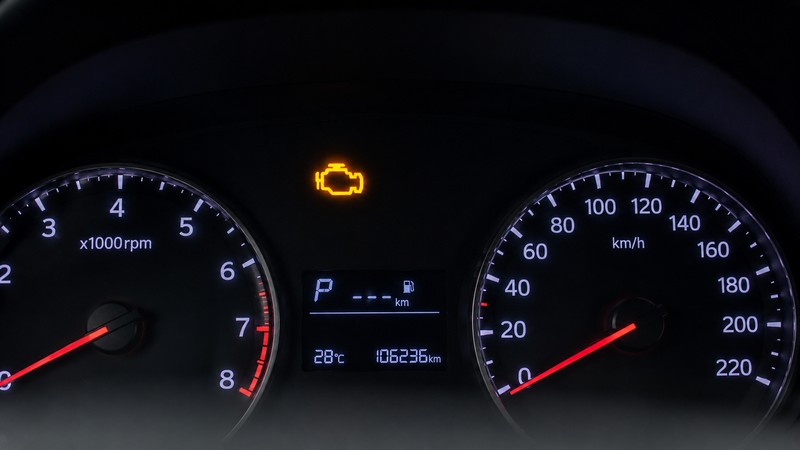
What the Check Engine Light Actually Is
The check engine light — also called the malfunction indicator lamp (MIL) — is part of your car's onboard diagnostics system (OBD). Every modern vehicle has an ECU (engine control unit) that continuously monitors hundreds of sensors across the engine, exhaust and emissions systems. When any sensor reading falls outside the acceptable range, the ECU stores a fault code and illuminates the check engine light on your dashboard.
The light itself tells you nothing specific — only that the ECU has detected a problem and stored a fault code. To find out what the code is, a mechanic connects a diagnostic scanner to the OBD port (usually located under the dashboard on the driver's side) and reads it. This is the only reliable way to know what triggered the light.
In Kenya, many drivers drive for weeks or months with the check engine light on, assuming it is a minor issue or an old sensor that can be ignored. Sometimes this is true. Often it is not — and the delay turns a Ksh 3,000 repair into a Ksh 50,000 one.
Solid vs Flashing: A Critical Difference
The behaviour of the check engine light tells you immediately how urgently you need to act.
A solid check engine light means the ECU has detected a fault that needs attention but is not immediately damaging the engine. Drive carefully to a garage within the next few days. A flashing or blinking check engine light means the engine is actively misfiring and unburnt fuel is entering the catalytic converter — this can cause permanent and expensive damage within minutes. Pull over safely and do not continue driving until the cause is diagnosed.
A flashing check engine light is treated as an emergency. If yours is flashing, reduce speed immediately, avoid hard acceleration, and get to a garage as soon as safely possible. Do not continue a long journey — a misfiring engine can destroy a catalytic converter (Ksh 25,000–80,000 to replace) in a matter of hours.
10 Most Common Causes in Kenya
1. Loose or Faulty Fuel Cap
The fuel cap seals the fuel tank and maintains pressure in the evaporative emissions system. A loose, cracked or missing fuel cap allows fuel vapour to escape, which the ECU detects as an evaporative emissions leak and triggers the check engine light. This is one of the most common causes of check engine lights in Kenya — particularly after drivers have a jerry can fuel top-up where the cap is replaced carelessly, or after filling up at a petrol station.
The fix: turn the fuel cap until it clicks firmly into place. If the cap is cracked or the seal is worn, replace it — a new fuel cap costs Ksh 500–1,500. After tightening or replacing the cap, the light may take 1–3 drive cycles to go out on its own, or a mechanic can clear it with a scanner.
2. Faulty Oxygen Sensor
The oxygen sensor monitors the amount of unburnt oxygen in the exhaust gases and sends real-time data to the ECU to adjust the fuel-air mixture. A faulty oxygen sensor causes the ECU to lose its ability to optimise combustion — typically resulting in a richer fuel mixture, noticeably increased fuel consumption, and sometimes rough running. Oxygen sensor failure is one of the most common check engine light triggers on older Japanese vehicles in Kenya.
There are typically two to four oxygen sensors on a modern vehicle. The specific fault code from a diagnostic scan tells the mechanic which one has failed. Oxygen sensor replacement costs Ksh 4,000–12,000 depending on the sensor location and vehicle model.
3. Worn Spark Plugs or Ignition Coils
Worn spark plugs or a failing ignition coil cause engine misfires — incomplete combustion in one or more cylinders. The ECU detects the misfire through the crankshaft position sensor and triggers the check engine light with a misfire fault code (P030X, where X is the cylinder number). A single misfiring cylinder causes a noticeable rough idle, reduced power and, if persistent, a flashing check engine light.
In Kenya, ignition coil failures are particularly common on Toyota vehicles — especially the 1ZZ and 2ZZ engines found in the Corolla and Fielder — and on Subaru engines. Spark plug replacement costs Ksh 1,500–5,000 for a full set. Individual ignition coil replacement costs Ksh 3,000–8,000 per coil. Have your engine checked promptly if you suspect a misfire.
4. Dirty or Failing Mass Airflow Sensor
The mass airflow (MAF) sensor measures the volume and density of air entering the engine so the ECU can calculate the correct amount of fuel to inject. A dirty or failing MAF sensor sends incorrect readings, causing the engine to run too rich or too lean — resulting in poor fuel economy, hesitation on acceleration, rough idle, and the check engine light. MAF sensors in Kenya get dirty faster than average due to dusty road conditions.
Before replacing the MAF sensor, have a mechanic try cleaning it with specialist MAF sensor cleaner spray — this resolves the problem in many cases at minimal cost. Replacement MAF sensors cost Ksh 5,000–15,000 depending on the vehicle.
5. Catalytic Converter Failure
The catalytic converter reduces harmful emissions in the exhaust. It can fail through physical damage from road impacts (very common in Kenya given the road surfaces), contamination from oil burning, or simply wear on high-mileage vehicles. A failing catalytic converter triggers the check engine light and may also cause a rotten egg smell from the exhaust, reduced engine performance and rattling from under the car if the internal substrate has broken up.
Catalytic converter replacement in Kenya costs Ksh 25,000–80,000 for an OEM unit. Aftermarket units are available for less but vary in quality and longevity. Driving with a physically damaged converter that is rattling should be avoided — loose substrate material can cause exhaust blockage.
6. EGR Valve Problems
The EGR (exhaust gas recirculation) valve recirculates a portion of exhaust gases back into the engine intake to reduce emissions and combustion temperatures. In Kenya's dusty conditions, EGR valves accumulate carbon deposits and stick in either the open or closed position — causing rough idle, hesitation, black smoke, and the check engine light. EGR problems are extremely common on diesel vehicles and on petrol engines that are frequently used in slow city traffic.
EGR valve cleaning (Ksh 2,000–5,000) can resolve a sticking valve caused by carbon buildup. A failed EGR valve that cannot be cleaned requires replacement at Ksh 8,000–25,000 depending on the vehicle. An engine specialist can advise on whether cleaning or replacement is appropriate.
7. Throttle Position Sensor Fault
The throttle position sensor (TPS) tells the ECU how far the accelerator pedal is being pressed, so the engine management system can deliver the correct fuel quantity. A failing TPS causes erratic engine behaviour — sudden surging, hesitation when accelerating, rough idle, and sometimes the engine stalling unexpectedly in traffic. In Nairobi's stop-start driving, a faulty TPS makes the car very difficult to drive smoothly. TPS replacement costs Ksh 3,000–10,000.
8. Evaporative Emission System Leak (EVAP)
The EVAP system captures fuel vapour from the tank and routes it back to the engine rather than venting it to the atmosphere. Any leak in the system — a cracked hose, a failed purge valve, or a loose fuel cap — triggers an EVAP fault code and the check engine light. EVAP faults are very common and usually not urgent — the car runs normally — but they should be investigated because some EVAP faults indicate a significant fuel vapour leak which is a fire risk.
9. Battery or Charging System Issue
A weak battery, a failing alternator, or loose battery terminals can cause voltage fluctuations that confuse the ECU and trigger spurious check engine light codes. This is particularly common in Kenya after the rainy season when battery terminals corrode quickly. If your check engine light came on shortly after jump-starting the car, or alongside other electrical symptoms like dimming lights or slow cranking, have the charging system tested first before assuming the cause is engine-related.
10. Transmission Fault
On many vehicles, the engine management system monitors transmission operation as well. Transmission faults — a slipping automatic gearbox, a failed solenoid, or low transmission fluid — can trigger the check engine light on the same ECU that manages the engine. If the check engine light is accompanied by rough gear changes, slipping, or hesitation during gear shifts, a transmission specialist should inspect the gearbox as part of the diagnosis.
What to Do When the Light Comes On
-
Check whether the light is solid or flashingSolid = drive carefully to a garage within a few days. Flashing = reduce speed immediately, avoid hard acceleration and get to a garage today. A flashing light means active misfiring that can cause expensive damage within hours.
-
Check your fuel cap firstRemove and firmly retighten the fuel cap until it clicks. If it is cracked or the rubber seal is compressed and hard, replace it (Ksh 500–1,500). This fixes a surprising proportion of check engine lights in Kenya at zero cost.
-
Check your oil level and coolant levelWhile not always directly related to the check engine light, low oil or coolant alongside the light can indicate a more serious underlying problem. Check both before driving further.
-
Get a diagnostic scan — do not guessA diagnostic scan reads the specific fault code stored by the ECU and takes all guesswork out of the diagnosis. It costs Ksh 500–2,000 at most Nairobi garages and 15 minutes of time. Find a diagnostic specialist near you on fixmycar.ke.
-
Repair the fault, then clear the codeAfter the repair is completed, the fault code should be cleared with the scanner. The light should stay off if the repair was successful. If it returns within a few drive cycles, the underlying problem was not fully resolved and needs further investigation.
Some garages in Nairobi will clear the fault code without diagnosing or repairing the cause — the light goes off and you leave satisfied, only for it to return within days. Always confirm that the underlying fault has been diagnosed and repaired, not just the code cleared. Ask to see the fault code before and after the repair.
Diagnostic & Repair Costs in Kenya (2025)
| Cause / Fix | Est. Cost (Ksh) | Urgency | Notes |
|---|---|---|---|
| Diagnostic scan (OBD read) | 500 – 2,000 | First Step | Always do this before any other repair |
| Fuel cap replacement | 500 – 1,500 | Low | Check this first — often the whole problem |
| Spark plug replacement (full set) | 1,500 – 5,000 | Medium | Do all plugs at once — never just one |
| Oxygen sensor replacement | 4,000 – 12,000 | Medium | Scan tells you exactly which sensor has failed |
| Ignition coil replacement | 3,000 – 8,000 | Medium | Very common on Toyota Corolla / Fielder in Kenya |
| MAF sensor clean / replace | 500 – 15,000 | Medium | Try cleaning first before replacing |
| EGR valve clean / replace | 2,000 – 25,000 | Medium | Very common on diesel and city-driven vehicles |
| Catalytic converter replacement | 25,000 – 80,000 | High | Flashing CEL can destroy the cat in hours |