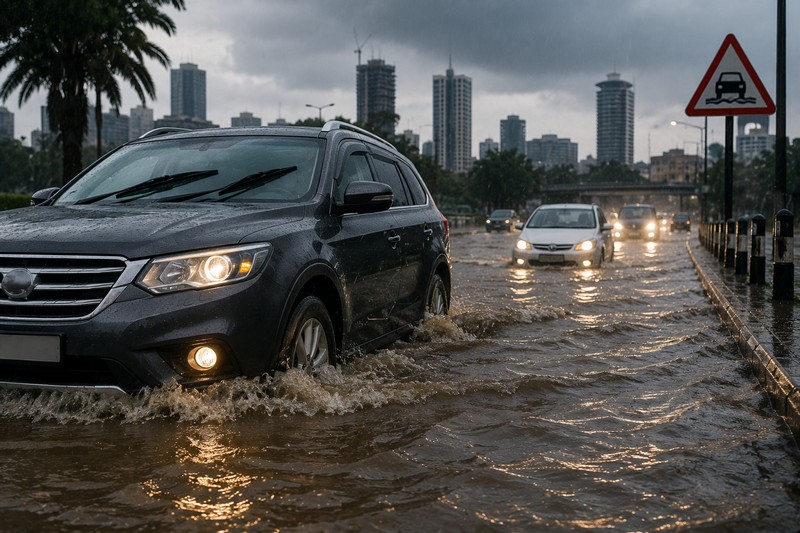
Why Nairobi Floods So Severely
Nairobi's flooding problem is structural and well-documented. The city was developed without adequate stormwater drainage infrastructure for its current size and population. Several factors combine to make Nairobi's flooding particularly severe and fast-developing:
- Impermeable surfaces everywhere. Tarmac, concrete and rooftops cover the majority of central Nairobi. When rain falls, almost none is absorbed — it all becomes surface runoff simultaneously.
- Blocked drainage channels. Nairobi's storm drains are frequently blocked with solid waste, plastic bags and silt. When rain comes, water has nowhere to go except the road surface.
- Topography concentrates water. Nairobi is built on a series of ridges and valleys. Low-lying roads — particularly along the Nairobi River and its tributaries — collect water from a large catchment area very quickly.
- Flash flood speed. Unlike slow-rising river floods, Nairobi's urban floods can develop within 15–20 minutes of heavy rainfall beginning. A road that was dry when you set off can be deeply flooded when you arrive.
The areas most frequently affected include sections of Ngong Road near the valley, roads around the Nairobi River in Westlands and Highridge, sections of Mombasa Road near Industrial Area, Lower Kabete Road, and numerous residential areas in Eastlands and across Nairobi's lower-lying estates.
What You Should Never Do in Floodwater
These rules apply without exception. No journey in Nairobi is important enough to risk the consequences of getting these wrong.
If you cannot see the road surface clearly and confirm the depth, do not enter the water. A puddle that looks 15cm deep may be 50cm — or may conceal a completely collapsed section of road or an open manhole. In Nairobi, road failures beneath floodwater are not uncommon.
- Never enter floodwater if you cannot see the road surface. Visibility below the water surface is zero in Nairobi's muddy floods. You cannot know the depth, whether the road surface is intact, or whether there is an open drain or pothole deep enough to trap your vehicle.
- Never follow other vehicles into floodwater assuming it is safe. A larger vehicle — a matatu, a truck or an SUV — may successfully cross water that will stall your sedan. A vehicle that made it through 10 minutes ago does not guarantee the water has not risen since.
- Never attempt to restart an engine that has stalled in floodwater. This is the single most expensive mistake Nairobi drivers make. If water has entered the air intake and reached the engine cylinders, attempting to crank the engine causes hydraulic lock — the incompressible water destroys connecting rods instantly, in a failure that costs Ksh 80,000–300,000+ to repair and often writes off the vehicle entirely.
- Never open your door into rising water. Once water reaches door sill height, the external water pressure makes the door very difficult to open. If water is rising rapidly, lower your window before it stops working — you may need to exit through the window if the door cannot be opened.
- Never turn around in moving flood water. A car turned sideways to moving water presents a much larger surface area to the flow. Moving water exerts significant force — even 30cm of fast-moving flood water can push a car off the road. If you need to turn around, reverse back the way you came rather than turning.
- Never stop in the middle of a flooded section. If you have committed to crossing a shallow flooded area, maintain slow, steady forward momentum. Stopping allows water to build up against the car's underside and can cause water to enter the exhaust. Keep moving slowly until you are through.
If You Must Cross Shallow Water
Sometimes there is genuinely no alternative route — particularly in Nairobi's residential areas where single access roads flood and remain the only way in or out. If you have confirmed the water is shallow — visually or by watching a pedestrian walk through — follow these steps.
-
Confirm the depth is safe for your vehicleFor a standard saloon car, the maximum safe crossing depth is approximately 15–20cm — roughly the height of a standard kerb. For an SUV or pickup with higher clearance, 25–30cm is the practical maximum. If you are not certain the water is within these limits, do not cross.
-
Select first gear and maintain a slow, steady speedEngage first gear (or L on an automatic) and drive at walking pace — approximately 5 km/h. Maintain a slightly higher engine revs than idle to prevent water from entering the exhaust pipe. Do not accelerate and do not stop.
-
Drive through the centre of the roadThe centre of the road is typically the highest point of the road profile and therefore the shallowest part of any flooding. Avoid the edges where drains and gutters create deeper water and hidden obstacles.
-
Do not follow too closely behind another vehicleThe bow wave and wash from the vehicle ahead can raise the local water level temporarily. Maintain a gap of at least 30 metres from the vehicle ahead when crossing flooded sections.
-
Test your brakes immediately after exitingWater on brake discs significantly reduces braking effectiveness. As soon as you are through the flooded section and on dry road, gently apply the brakes several times to generate heat that dries the disc surface. Confirm the brakes are responding normally before continuing at normal speeds.
Understanding Flood Engine Damage
The most catastrophic — and most preventable — consequence of driving through floodwater in Nairobi is hydraulic lock damage to the engine. Understanding exactly how it happens helps explain why the "do not restart" rule is absolute.
How Hydraulic Lock Destroys an Engine
Your engine works by compressing a mixture of air and fuel in each cylinder before igniting it. Gases are compressible — the piston can force them into a smaller space as it rises. Water is not compressible. When water enters the air intake — which is typically located above the bumper height on most cars, but can be reached by deeper water or by the engine drawing water in through forward momentum — it travels into the inlet manifold and reaches the cylinders.
When the starter motor turns the engine over in an attempt to start it, the pistons rise to compress what they assume is an air-fuel mixture. Instead, they encounter incompressible water. The connecting rod — the component linking the piston to the crankshaft — cannot bend. Something has to give: the connecting rod bends catastrophically, sometimes breaking through the engine block. This is called a bent rod or hydraulic lock failure and it is one of the most expensive engine failures possible.
The cost of hydraulic lock damage ranges from Ksh 80,000 for replacing damaged components on a small engine to Ksh 300,000+ for a full engine replacement on a larger vehicle. In many cases the repair cost exceeds the vehicle's value — particularly for older vehicles common in Kenya's market.
Signs That Water Has Entered Your Engine
- The engine stalled while driving through water — the most obvious sign. Do not restart.
- The air filter is wet — check immediately after any flood crossing. A wet air filter means water has reached the intake and potentially the engine. Do not restart until inspected.
- The dipstick shows a milky or frothy oil level — water has mixed with the engine oil, which causes the characteristic milky emulsion. This indicates significant water ingress. The engine must not be started under any circumstances.
- Water drips from the exhaust when cranking — if the starter motor is turned briefly and water comes from the exhaust pipe, water has reached the cylinders. Stop immediately.
What to Do After Driving Through a Flood
-
Check the air filter immediatelyOpen the bonnet and locate the air filter box. Remove and inspect the filter. If it is wet or damp, water has entered the intake system. Have a mechanic inspect the engine before restarting — even if the car appears to be running normally.
-
Check the oil dipstickPull the dipstick and look at the oil on the end. Normal oil is amber to dark brown and clear. Milky, frothy or grey-tinged oil means water has entered the engine. Do not restart the engine if this is present — tow the vehicle to a garage immediately.
-
Inspect all electrical connectors and lightsAfter deep water exposure, water can enter headlights, tail lights and electrical connectors. Allow the car to dry thoroughly in a ventilated space before testing electrical systems. Look for condensation inside light clusters — a sign of water ingress that can cause corrosion and short circuits over time.
-
Check brake effectiveness before driving at speedTest the brakes gently several times after any flood crossing to dry the discs and confirm normal effectiveness. If the brakes feel spongy, faded or uneven after several applications on dry road, have them inspected before driving at normal speeds. Find a brake specialist near you.
-
Have the car fully inspected if it was significantly submergedIf water reached the door sills or higher, have a full post-flood inspection at a garage. Electrical systems, wheel bearings (water washes out bearing grease), differential oil (water ingress through breathers) and brake components all need checking. Find a trusted mechanic at fixmycar.ke.
When a car is submerged to door sill height or deeper, water can enter the differential and gearbox through their breather vents. The oil in these components turns milky — similar to engine oil contamination. Check the differential and gearbox oil after any significant flood submersion and change it if it shows any sign of water contamination. Running a differential or gearbox on water-contaminated oil causes rapid bearing failure.
Flood Damage Repair Costs in Kenya (2025)
| Damage Type | Est. Cost (Ksh) | Severity | Notes |
|---|---|---|---|
| Air filter replacement | 500 – 2,000 | Low | Replace if wet — never restart with a wet filter |
| Brake disc and pad replacement | 5,000 – 18,000 | Medium | Per axle — after severe flood exposure |
| Wheel bearing replacement | 4,000 – 15,000 | Medium | Flood water washes out bearing grease |
| Differential oil change | 2,000 – 5,000 | Medium | After submersion to door sill height or deeper |
| Electrical system diagnosis and repair | 2,000 – 20,000 | Medium | Varies hugely by extent of water ingress |
| Engine oil and filter change | 2,000 – 5,000 | Medium | If any water contamination is suspected |
| Hydraulic lock repair (bent rods) | 80,000 – 200,000 | Critical | Result of restarting a water-filled engine |
| Full engine replacement | 150,000 – 350,000 | Critical | Severe hydraulic lock — often exceeds vehicle value |
Preparing Your Car for Nairobi's Rainy Season
The best flood protection is preparation before the rains arrive. These steps reduce both the risk of flood damage and the cost of any damage that does occur.
- Know your vehicle's air intake height. The air intake is the most vulnerable point during flood crossings. For most saloon cars it is located behind the front bumper at a height of 25–35cm. For SUVs it is typically 35–50cm. Knowing this number tells you the maximum safe crossing depth for your specific vehicle.
- Save alternative route options before the rains. Identify 2–3 alternative routes for your most frequent journeys — home, work, school. When your normal route floods, you need to know the alternatives without having to navigate in poor visibility and stress.
- Have your seals checked before the rains. Door seals, windscreen seals and underbody drain plugs should be inspected. Water ingress through failed seals during flooding can damage electrical components and cause interior mould. Find a trusted mechanic at fixmycar.ke.
- Keep your fuel tank at least half full during rainy season. Flooded routes cause diversions and longer journeys. Running low on fuel while stuck in a flooded Nairobi traffic diversion is a preventable problem.
- Check your comprehensive insurance covers flood damage. Contact your insurer before the rains and confirm what flood damage cover you have. Understand what you need to document (photographs, mechanic's report) to make a valid claim if needed.
- Follow real-time Nairobi traffic updates during rain. Twitter and WhatsApp groups focused on Nairobi traffic often provide faster flood reports than official channels. Knowing which routes are flooded before you commit to them saves both time and potential vehicle damage.
Find a Mechanic for Post-Flood Inspection
Search 400+ verified garages across Nairobi and Kenya on FixMyCar. Get your car inspected after flood exposure before hidden damage becomes a bigger problem.
Find a Garage Now →Free to search · No booking fees · 400+ garages listed