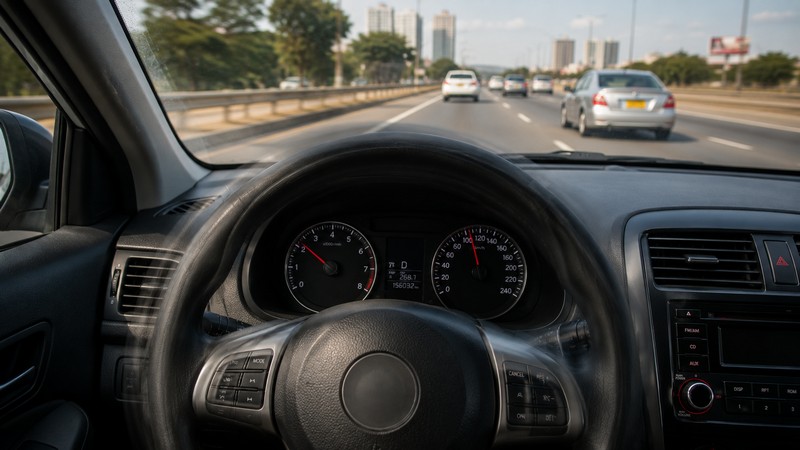
When Does It Shake? The First Clue
The speed at which the vibration starts — and whether it disappears at higher speeds — tells you a great deal about the cause before you even visit a garage. Pay attention to these patterns next time it happens.
- Shakes between 80–100 km/h and smooths out above 110 km/h: Almost certainly a wheel balancing issue.
- Shakes from 80 km/h and gets progressively worse: Likely a tyre problem — flat spot, bulge, or severe uneven wear.
- Vibration felt in the seat as well as the steering wheel: Often rear wheel or suspension related rather than front.
- Shaking only when braking at speed: Warped brake discs are the most common cause — not a suspension issue.
- Vibration at all speeds including very slow: Could be a bent wheel rim, a damaged CV joint, or a serious suspension fault.
5 Most Common Causes
1. Wheels Out of Balance
Wheel balancing is the most common cause of steering wheel vibration at speed in Kenya — and fortunately the cheapest to fix. Every wheel and tyre combination has tiny weight imbalances. Balancing machines add small lead weights to the rim to eliminate these. The problem is that in Kenya, wheels go out of balance faster than almost anywhere else. Every pothole you hit, every speed bump you take too fast, and every stretch of murram road shifts those balance weights or creates new imbalances in the tyre itself.
The Nairobi–Nakuru highway, the road to Mombasa, and Nairobi's own pothole-heavy roads are particularly hard on wheel balance. Balancing costs Ksh 300–600 per wheel at most Nairobi tyre shops and takes about 30 minutes for a full set. It should be done every 10,000 km or immediately after any significant pothole impact.
2. Wheel Misalignment
Wheel alignment refers to the precise angles at which your tyres contact the road. When these angles are correct, your tyres wear evenly and your car tracks straight. After Kenya's potholes and speed bumps have knocked your suspension around, the angles shift — and uneven tyre wear, a car that pulls to one side, and steering wheel shimmy follow.
Unlike balancing, misalignment tends to cause a continuous gentle shimmy or pull rather than a sharp speed-specific shake. Look at your tyre tread: if one side of the tyre is wearing significantly faster than the other, alignment is almost certainly the issue. Wheel alignment in Nairobi costs Ksh 1,500–3,500 for a standard two-wheel alignment and Ksh 2,500–4,500 for a four-wheel alignment.
3. Worn or Damaged Tyres
Tyres that have developed flat spots, internal bulges, or severely uneven wear patterns will vibrate at speed regardless of how well they are balanced. A flat spot develops when a vehicle sits unused for a long time, causing the tyre to deform slightly where it contacts the ground. Bulges appear when the internal structure of the tyre is damaged by a sharp impact — a pothole strike or a hard kerb hit at speed.
Run your hand slowly around the full circumference of the tyre sidewall to feel for bulges. Look at the tread surface for uneven wear across the width of the tyre. A tyre with a visible bulge must be replaced immediately — it is structurally compromised and at serious risk of sudden blowout, particularly at highway speeds.
On the Nairobi–Mombasa highway and roads around Athi River, pothole strikes are a leading cause of sudden tyre bulges. If you hit a significant pothole at speed, pull over at the next safe opportunity and inspect all four tyres visually before continuing your journey.
4. Worn Wheel Bearings
Wheel bearings allow your wheels to spin freely with minimal friction. When they wear out — which happens faster on rough Kenyan roads — they create vibration and a humming or growling noise that changes pitch as you turn the steering wheel left and right. Unlike balancing issues, wheel bearing problems get progressively worse over weeks and months, and will eventually lead to a wheel seizing completely without warning.
A simple test: at highway speed, gently weave the car left and right. If the humming changes pitch significantly as you load and unload the bearings, a worn wheel bearing is very likely. Do not delay this repair — a seized wheel bearing at highway speed is a serious accident risk. Wheel bearing replacement in Nairobi costs Ksh 4,000–15,000 per wheel depending on the vehicle.
5. Worn Suspension or Steering Components
Ball joints, tie rod ends, and suspension bushings are the components that link your steering wheel to your tyres. As they wear — which Kenya's roads accelerate considerably compared to smoother networks — they develop play that allows the wheel to move slightly out of its intended path at speed. This creates vibration, a vague or imprecise steering feel, and clunking noises over bumps.
Worn ball joints are particularly dangerous because they can fail suddenly, causing immediate and total loss of steering control. A car with high mileage on Kenya's roads should have its ball joints and tie rod ends inspected at every major service. Suspension component replacement costs Ksh 2,000–20,000 depending on the specific part and vehicle model.
How to Diagnose the Problem
-
Note the exact speed range when it shakesIf it starts at around 80 km/h and disappears above 110 km/h, it is almost certainly wheel balancing. If it is present at all speeds above 80 km/h and gets worse, suspect tyres or wheel bearings.
-
Inspect tyres visually and by handLook at each tyre for bulges, flat spots, and significantly uneven tread wear across the width. Run your hand around the sidewall to feel for bulges invisible to the eye. Check all four rims for obvious bends or cracks.
-
Try wheel balancing first — it is the cheapest optionIf there is no obvious tyre damage, start with wheel balancing at a reputable tyre shop (Ksh 300–600 per wheel). If the vibration disappears, problem solved at minimum cost. If it persists, move to the next step.
-
Have wheel alignment checkedA proper four-wheel alignment check costs Ksh 2,500–4,500 and will tell you if the steering geometry is within the manufacturer's specification. Fix any alignment issues found before reassessing.
-
If vibration persists, get suspension fully inspectedAsk a mechanic to check wheel bearings, ball joints, tie rod ends and bushings. Find a trusted suspension specialist at fixmycar.ke.
Repair Costs in Kenya (2025)
Always start with the cheapest possible fix and work up. Wheel balancing resolves most vibration complaints for under Ksh 2,500 for all four wheels.
| Service / Repair | Est. Cost (Ksh) | Severity | Notes |
|---|---|---|---|
| Wheel balancing (per wheel) | 300 – 600 | Low | Do all 4 at once — takes 30 minutes |
| Wheel alignment (4-wheel) | 2,500 – 4,500 | Low | Do after any pothole impact or suspension work |
| Tyre replacement (per tyre) | 4,000 – 15,000 | Medium | Varies hugely by brand and size |
| Wheel bearing (per wheel) | 4,000 – 15,000 | Urgent | Do not delay — can seize without warning |
| Ball joint replacement | 3,000 – 12,000 | Urgent | Safety-critical — replace immediately if worn |
| Tie rod end replacement | 2,500 – 8,000 | Medium | Often replaced in pairs for balanced wear |
| Suspension bush replacement | 2,000 – 8,000 | Medium | Polyurethane bushes last longer on Kenyan roads |
Prevention Tips for Kenyan Roads
- Balance your wheels every 10,000 km — or immediately after any significant pothole impact. Most Nairobi tyre shops offer free rebalancing if you bought the tyres from them.
- Check wheel alignment every 20,000 km or after any suspension work, serious road impact, or if you notice the car pulling to one side.
- Maintain correct tyre pressure. Under-inflated tyres wear unevenly, increase the risk of heat damage and bulges, and make balancing problems worse. Check pressure monthly — when the tyres are cold.
- Rotate your tyres every 10,000–15,000 km. This ensures even wear across all four tyres and extends their total service life considerably.
- Slow down significantly for potholes and speed bumps. Hitting a pothole at 80 km/h puts enormous impact force through your tyres, rims and suspension. Slowing to 20–30 km/h before a bump reduces damage dramatically.
- Have suspension inspected at every major service. Ask your mechanic to specifically check ball joints, tie rods, wheel bearings and bushings at every 20,000 km or annual service interval.
Fix Your Vibration Problem Today
Find wheel balancing specialists, alignment centres and suspension experts across Nairobi and Kenya on FixMyCar.
Find a Specialist →Free to search · No booking fees · 400+ garages listed