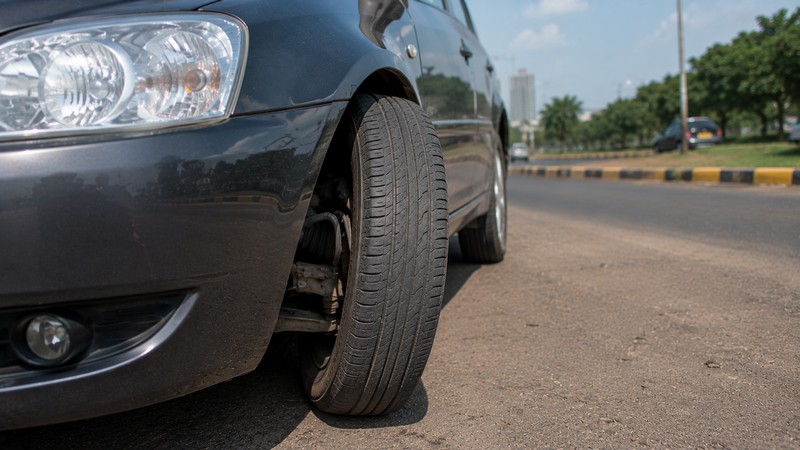
What Each Noise Means
The type of noise your car makes when turning is the most important clue to the cause. Different sounds point to completely different components. Listen carefully and note which of these matches what you are hearing — it will save diagnostic time and money at the garage.
- Clicking or popping when turning at slow speed — especially when turning sharply into a driveway or roundabout: almost always a worn CV (constant velocity) joint. Very common in Kenya.
- Grinding when turning at any speed: worn wheel bearing, a brake component rubbing, or metal-to-metal contact in the steering or suspension.
- Clunking or knocking when turning over bumps: worn ball joint, worn tie rod end, or a broken/loose suspension component. Nairobi's potholes accelerate all of these.
- Squealing when turning at low speed: low power steering fluid, a worn power steering pump belt, or in some cases brake pads touching the disc at a slight angle.
- Humming that changes pitch when you steer left or right: a worn wheel bearing — the pitch change as you load and unload the bearing is the giveaway.
- Creaking or groaning when turning slowly: dry or worn suspension bushings — very common on Kenyan roads and generally not immediately dangerous but should be addressed.
6 Common Causes
1. Worn CV Joint
The CV (constant velocity) joint is part of the driveshaft that transmits power from the gearbox to the front wheels while allowing the wheel to turn for steering. It is protected by a rubber boot filled with grease. When this boot splits — which happens frequently on Kenya's rough roads and in murram dust — the grease escapes and the joint runs dry. Without lubrication, the joint wears rapidly and produces the characteristic clicking or popping sound when the wheel is turned to a sharp angle.
A clicking CV joint is one of the most common repair jobs in Nairobi garages. The noise is typically loudest when turning sharply at low speed — entering a parking space, taking a tight roundabout, or reversing into a driveway. The joint may be quiet or silent when driving straight. If caught early — when the boot has just split but the joint itself is still intact — a boot replacement and regreasing (Ksh 2,000–5,000) saves the joint entirely. If the clicking is already present, the full CV joint needs replacement (Ksh 5,000–15,000).
After driving on murram roads, visually inspect your CV boot — the accordion-shaped rubber sleeve on the inner side of each front wheel. If you see grease splattered around the boot area or a visible split in the rubber, have it replaced immediately. A Ksh 2,000 boot replacement prevents a Ksh 12,000 CV joint replacement later.
2. Worn Wheel Bearing
Wheel bearings allow each wheel to spin freely with minimal friction. When they wear out — which Kenya's potholed roads accelerate significantly — they produce a humming, grinding or growling sound that often changes in pitch when you turn the steering wheel. This happens because steering left or right shifts the load between the two front wheel bearings — loading the failing bearing more causes the sound to change.
A useful test: at highway speed, gently and safely weave the car left and right. If the humming or grinding increases when you steer in one direction and decreases in the other, the wheel bearing on the side that gets louder when loaded is the failing one. Wheel bearing problems get progressively worse and will eventually lead to a wheel seizing — a serious and sudden danger at any speed. Wheel bearing replacement in Nairobi costs Ksh 4,000–15,000 per wheel.
3. Worn Ball Joints
Ball joints connect the steering knuckle to the suspension arms, allowing the wheel to turn for steering and move up and down with the suspension simultaneously. When ball joints wear — which Kenya's combination of potholes, speed bumps and unpaved roads causes faster than almost anywhere — they develop play that produces clunking, knocking or creaking sounds, particularly when turning over uneven surfaces.
Worn ball joints are one of the most safety-critical components on your car. A failed ball joint can cause the front wheel to collapse suddenly inward, leading to immediate and complete loss of steering control. If you hear clunking when turning over bumps or feel looseness in the steering, have your ball joints inspected immediately. Ball joint replacement in Nairobi costs Ksh 3,000–12,000 per joint. Find a suspension specialist near you.
4. Low or Contaminated Power Steering Fluid
Power steering systems use hydraulic fluid to assist the steering effort. When the fluid level drops — through a leak in the system — or when old fluid becomes contaminated and loses its properties, the power steering pump works harder and produces a whining, squealing or groaning sound when you turn the wheel, particularly at low speed or when the wheel is turned close to full lock.
Check your power steering fluid reservoir (a small translucent tank near the engine with a steering wheel symbol on the cap). If the level is below the minimum mark, top it up with the correct fluid type specified in your owner's manual. A persistent low level indicates a leak that needs finding and fixing. Power steering fluid top-up costs very little; a pump replacement costs Ksh 8,000–25,000.
5. Worn Tie Rod Ends
Tie rod ends connect the steering rack to the front wheels and transmit steering inputs from the wheel to the tyres. When they wear — again, faster on Kenya's rough roads than the manufacturer's schedule anticipates — they develop play that produces knocking or clunking sounds when turning, particularly over bumps or uneven road surfaces. Worn tie rod ends also cause imprecise, vague steering feel and typically lead to uneven tyre wear.
Tie rod end inspection is straightforward for a mechanic — lifting the car and checking for play takes a few minutes. Replacement costs Ksh 2,500–8,000 per end, and they are often replaced in pairs to ensure balanced steering. Wheel alignment must always be done after any tie rod end replacement. Find a tyre and suspension specialist for inspection.
6. Worn or Dry Suspension Bushings
Suspension bushings are rubber or polyurethane cushions at the pivot points of suspension arms. They absorb road shocks and allow controlled movement of the suspension. When they wear out or dry out — which Nairobi's combination of heat and rough roads accelerates — they produce creaking, groaning or light knocking sounds when the suspension moves, including during turning. Bushing wear also causes vague handling and increased road noise generally.
Worn bushings are generally not immediately dangerous but degrade ride quality and handling significantly. They also accelerate wear on other suspension components around them. Bushing replacement costs Ksh 1,500–6,000 per set depending on the location and vehicle. Polyurethane replacement bushings last significantly longer than standard rubber ones in Kenyan conditions.
How to Diagnose the Problem
-
Identify the noise type preciselyClick or pop at slow sharp turns = CV joint. Grinding at any speed = wheel bearing or brake contact. Clunk over bumps while turning = ball joint or tie rod. Squeal at low speed = power steering. Hum that changes when weaving = wheel bearing. Creak at slow speed = bushings.
-
Test the CV joint in a car parkFind a quiet car park. Turn the steering wheel to full lock in one direction and drive slowly in a tight circle. If you hear clicking or popping, a CV joint on that side is worn. Repeat turning the other way to check the other side.
-
Test for wheel bearing noise at highway speedAt 80–100 km/h on a straight road, gently weave left and right. If a humming or grinding changes pitch as you steer each way, a wheel bearing is failing. The side that gets louder when you steer towards it is the suspect bearing.
-
Check power steering fluid levelIf you hear squealing or groaning when turning, check the power steering fluid reservoir before anything else. A low level is a quick and cheap fix. If the level was low, find and fix the source of the leak — it will just drop again.
-
Have suspension inspected by a mechanicBall joints, tie rod ends and bushings require the car to be lifted for proper inspection. Find a trusted suspension specialist on fixmycar.ke — most will inspect and quote for free or at minimal cost.
Repair Costs in Kenya (2025)
| Repair / Service | Est. Cost (Ksh) | Urgency | Notes |
|---|---|---|---|
| CV boot replacement (per boot) | 2,000 – 5,000 | Medium | Do immediately when split — saves the joint |
| CV joint replacement (per joint) | 5,000 – 15,000 | Medium | Reconditioned joints widely available in Nairobi |
| Wheel bearing replacement | 4,000 – 15,000 | Urgent | Do not delay — can seize without warning |
| Ball joint replacement (per joint) | 3,000 – 12,000 | Urgent | Safety-critical — replace immediately if worn |
| Tie rod end replacement (per end) | 2,500 – 8,000 | Medium | Always do wheel alignment after replacement |
| Power steering fluid top-up | 500 – 1,500 | Low | Find and fix the leak or it will drop again |
| Suspension bushing replacement | 1,500 – 6,000 | Low | Polyurethane bushes last longer in Kenyan conditions |
Prevention Tips for Kenyan Roads
- Inspect your CV boots every 10,000 km or after any extended murram road driving. A split boot caught early costs Ksh 2,000 to fix. Ignored, it becomes a Ksh 12,000 CV joint replacement.
- Slow down significantly for potholes and speed bumps. The impact force on ball joints, tie rods and wheel bearings when hitting a pothole at 80 km/h is enormous. Reducing to 20–30 km/h before an obstacle dramatically extends component life.
- Have suspension inspected every 20,000 km. Ask your mechanic to specifically check CV boots, ball joints, tie rod ends and wheel bearings at every major service — not just when you hear a noise.
- Check power steering fluid level monthly. A small leak left unattended drains the reservoir, runs the pump dry and causes expensive pump failure. A monthly 30-second check prevents this entirely.
- Do wheel alignment after any suspension repair. Replacing ball joints, tie rods or bushings changes the suspension geometry. Always follow up with a four-wheel alignment to restore correct tyre wear and handling.
- Consider polyurethane bushings when replacing worn ones. Standard rubber bushings deteriorate faster in Kenya's heat and rough road conditions. Polyurethane alternatives last significantly longer and improve handling precision.
Get Your Steering & Suspension Inspected
Find trusted suspension and steering specialists across Nairobi and Kenya on FixMyCar. Many offer free inspections and same-day quotes.
Find a Specialist Near You →Free to search · No booking fees · 400+ garages listed